2026-06-12
AI Period-Character Product Videos: A Rights-Safe Concept Workflow
Create playful period-character product video concepts with AI while avoiding real-person likeness issues and keeping the product reveal clear.
Try this workflow in Naviya
Apply the prompt structure directly inside Naviya video generation workflows.
Plan a video prompt
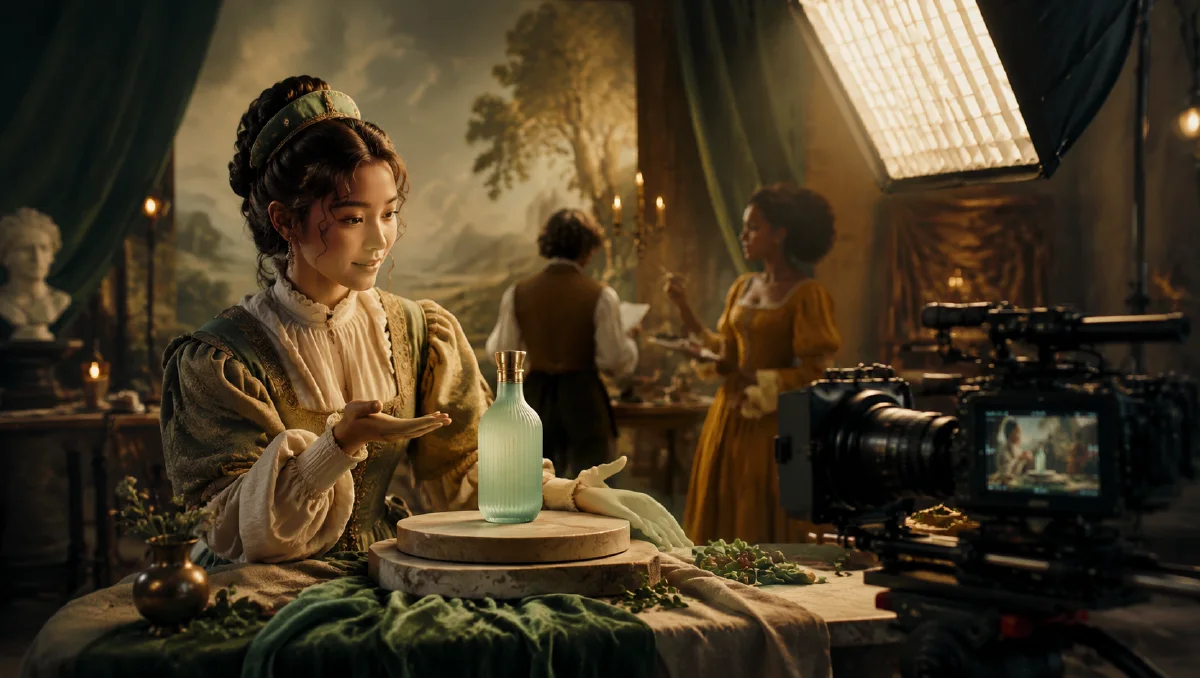
A modern product placed inside an unexpected historical or painterly world can create instant attention. A folding phone in a palace scene, a smart device in an oil-painting-inspired portrait, or a wearable product in a theatrical old-world setting all use the same creative tension: the product belongs to today, but the scene feels from another time.
The best version of this idea is not about copying real people or implying endorsement. It is about building fictional period-inspired characters and art styles that create contrast around the product. Use archetypes, wardrobe, materials, and scene design rather than recognizable likenesses.
If you need structure for product-first prompting, read AI product scene generation. For keeping the device consistent, use reference image prompting. For turning a still into a clip, follow the image to video workflow guide.
Definition: what is a period-character product video?
A period-character product video is a short concept clip where a fictional character from a historical, theatrical, or painterly world interacts with a modern product. The creative effect comes from contrast: ancient ritual versus modern interface, classical painting versus sleek hardware, ornate costume versus minimal industrial design.
This format works for phones, watches, headphones, cameras, beauty packaging, luxury accessories, and game devices. It can become a social hook, launch teaser, or creative mood film.
Keep the concept rights-safe
Use fictional archetypes rather than real individuals. Instead of asking for a known historical figure or celebrity, describe a role:
| Risky direction | Safer direction |
|---|---|
| A real emperor praises a phone | A fictional royal figure in ornate court robes discovers a modern phone |
| A known painter holds a product | A fictional oil-painting portrait subject examines a device |
| A famous actress uses a lipstick | A fictional golden-age cinema performer applies a luxury lipstick |
| A real inventor presents a gadget | A fictional old-world scientist studies a glowing product |
This keeps the concept focused on style, contrast, and storytelling. It also gives you more creative control because you are not trying to match a specific face.
Step 1: choose the contrast
The product should create a meaningful break in the scene. A smartphone works well because it is visibly modern. A beauty product can work if the packaging has a clear shape and premium surface. A car can work if the environment frames it as an impossible arrival.
Write the contrast in one line:
A fictional court painter discovers a modern foldable phone inside an ornate palace studio.
Or:
A theatrical period performer holds a glossy red lipstick under candle-like studio light.
If the contrast is not obvious, the viewer may read the scene as costume content instead of product storytelling.
Step 2: build the still frame
Start with a high-quality still image. The product needs to be visible and held or placed naturally. Prompt the character, style, product, and setting in separate blocks.
Prompt template:
Create a fictional period-inspired product advertising image.
Character: [fictional role, wardrobe, pose].
Product: [modern product shape, color, material, how it is held].
Setting: [palace room, painterly studio, old library, theatrical stage].
Style: [fine brushwork, classical oil painting influence, cinematic portrait, ornate detail].
Lighting: [warm side light, candle glow, dramatic shadow, premium contrast].
Composition: product clearly visible, character expression curious and impressed.
Constraints: fictional character only, no real-person likeness, no readable fake text, no brand logo imitation.
Example:
Create a fictional period-inspired advertising portrait.
Character: a regal court figure in golden embroidered robes and a tall ceremonial hat, one hand holding a brush, the other holding a modern violet foldable smartphone.
Product: slim foldable phone, glossy violet finish, circular multi-camera detail, clearly visible in the foreground.
Setting: ornate palace studio with carved wood, decorative wall patterns, and warm theatrical light.
Style: delicate brushwork, refined historical portrait feeling, cinematic product contrast.
Constraints: fictional character only, no real-person likeness, no readable text.
Step 3: refine the product
AI-generated devices often distort. If you have an approved product image, use it as a reference and replace the generated device while keeping the scene. The goal is to preserve the product silhouette, color, and camera placement.
Refinement prompt:
Replace the device in the character's hand with the provided product reference.
Keep the character, pose, costume, lighting, and background unchanged.
Match perspective and hand placement naturally.
Preserve the product shape, color, camera area, and surface material.
No extra fingers, no warped edges, no fake screen text.
This step matters most when the final video is commercial. A concept can be loose; a product ad needs recognizability.
Step 4: animate the interaction
Use the refined still as the starting frame. Keep motion minimal:
The fictional period character slowly turns the modern product toward the camera.
The character's expression shifts from curiosity to admiration.
Fabric moves subtly, warm light flickers across the room.
Camera makes a slow push-in.
The product remains stable and clearly visible.
No scene change, no extra people, no product distortion.
Small movements sell the concept. Large gestures can cause hand, face, and product errors. If the product is the priority, lock the character and move the light instead:
Camera locked. Warm highlights move across the product surface while the character holds it still.
Step 5: edit into a short concept ad
A compact sequence can work like this:
| Time | Shot |
|---|---|
| 0-2 seconds | Period setting and character establish the world |
| 2-4 seconds | Product appears in hand or on table |
| 4-6 seconds | Character reacts with subtle admiration |
| 6-8 seconds | Product hero close-up |
| 8-10 seconds | Final brand frame or offer |
Use AI video hooks examples if you need stronger opening ideas. The hook is the contrast; the product memory comes from the final close-up.
Make the product the punchline
The period world should create surprise, but the product should carry the payoff. That means the edit needs a clear reveal moment. You can begin with a painterly portrait, cut to a hand holding an unexpected modern device, then finish with a clean product close-up outside the historical setting. This final cut-out shot helps the viewer remember what is being advertised.
For luxury goods, keep the reaction understated: a small glance, a slow turn, a quiet smile. For playful consumer electronics, the reaction can be more exaggerated, but the product should still remain physically believable in the character's hand. The more theatrical the world becomes, the more stable the product needs to be.
Try it in Naviya
Generate the concept still in Naviya Image Generator, then preserve the product with Naviya Reference to Video. For quick motion tests, use Naviya Image to Video. If you want to package the concept as a paid-social cut, try Naviya AI Video Ads.
Quality and safety checklist
Before publishing, check:
- The character is fictional and not a recognizable real person.
- The product is visible and not warped.
- The art style supports the concept without overpowering the ad.
- The motion is subtle enough to preserve hands and product shape.
- The final frame makes the product benefit or personality clear.
- The copy does not imply endorsement by any real person or institution.
Period-character product videos work because they create a playful collision of worlds. Keep the character invented, the product clear, and the motion restrained. The result can feel imaginative while still serving a practical brand objective.