2026-06-12
AI Style Prompt Pack for Brand Visuals: Six Reusable Looks
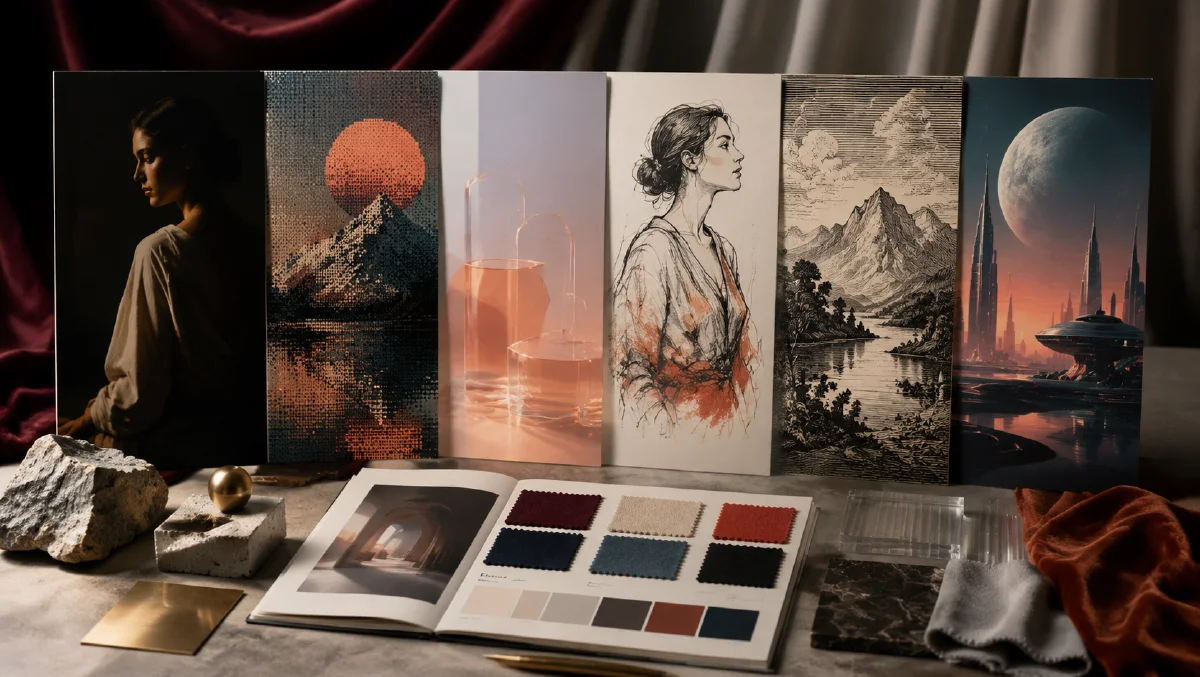
Use six reusable AI style prompt structures for brand visuals: chiaroscuro, pixel dithering, translucent material, hand-drawn, engraving, and retro futurism.
Try this workflow in Naviya
Use the guide to shape a still image, then keep it as a first frame or campaign asset.
Open the studio
A style prompt pack is a set of reusable visual recipes. Each recipe describes material, lighting, texture, color, and composition so you can apply the same look to many subjects. This is useful for brand exploration, campaign boards, thumbnails, posters, product visuals, and social content.
The key is to separate subject from style. The subject can change. The style rules remain stable. A coffee cup, sneaker, mascot, skincare bottle, or fashion accessory can all be tested through the same six looks to see which direction has the strongest brand potential.
Use AI Image Generator to test the styles. For motion, use Image to Video. Related guides include AI style extraction prompts, hex color grading AI prompts, AI lighting prompts guide, and unique photography AI prompts.
Definition
A style prompt pack is a compact library of visual directions. Each style includes:
- Visual traits.
- Lighting.
- Color.
- Material or texture.
- Composition.
- Constraints.
Use the pack by replacing only the subject line.
Template:
Subject: [the product, person, mascot, or object]
Style recipe: [one of the styles below]
Composition: [poster, product hero, square social, banner, close-up]
Constraints: keep the subject readable, no fake text, no extra logos.
1. Minimal chiaroscuro
This style uses strong light and shadow to create mystery and premium focus. It is ideal for luxury products, tech details, accessories, and dramatic portraits.
Visual traits:
- High contrast.
- Black and white or limited color.
- Edge light defining shape.
- Minimal background.
- Abstract silhouette.
Prompt:
Subject: [subject].
Style: minimal chiaroscuro, dramatic side light, deep black shadows, crisp rim highlight, sculptural silhouette, premium black-and-white photography.
Composition: simple poster frame, large negative space, subject partially emerging from darkness.
Constraints: keep the subject recognizable, no clutter, no fake text.
2. Retro pixel dithering
This style references early computer graphics. It feels nostalgic, digital, and graphic. Use it for music, games, creator merch, and playful product drops.
Visual traits:
- 1-bit black and white.
- Dithered shading.
- Low-resolution texture.
- Simple shapes.
- Early desktop computer mood.
Prompt:
Subject: [subject].
Style: retro 1-bit pixel dithering, black and white, early computer display texture, dot-pattern shadows, low-resolution graphic charm.
Composition: centered icon-like poster, clean outline, limited detail.
Constraints: subject must remain readable at small size, no color, no fake text.
3. Translucent jade material
This is a modern 3D style with semi-transparent material, subsurface scattering, soft refraction, and glossy rounded forms. It works well for abstract brand assets, wellness, beauty, and futuristic product concepts.
Visual traits:
- Semi-transparent material.
- Soft inner glow.
- Rainbow refraction.
- Smooth rounded surfaces.
- Clean studio lighting.
Prompt:
Subject: [subject].
Style: translucent jade-like 3D material, soft subsurface scattering, pearlescent refraction, rounded glossy forms, gentle studio light.
Composition: clean product hero on a simple surface, soft shadows, premium modern look.
Constraints: preserve subject silhouette, no extra objects, no unreadable text.
4. Nordic playful hand-drawn
This style feels light, warm, and approachable. It is useful for children's products, stationery, lifestyle content, food, and friendly brand illustration.
Visual traits:
- Flat shapes.
- Limited palette.
- Crayon or marker texture.
- Simple line work.
- Casual, handmade mood.
Prompt:
Subject: [subject].
Style: Nordic playful hand-drawn illustration, flat shapes, limited blue, orange, and cream palette, marker texture, charming simple line work.
Composition: friendly poster layout with breathing room, soft handmade imperfections.
Constraints: keep subject clear, avoid overly complex detail, no fake text.
5. Classical copperplate engraving
This style imitates old encyclopedias, botanical plates, and vintage technical drawings. It gives products and objects a sense of history and craft.
Visual traits:
- Monochrome line work.
- Cross-hatching.
- Paper texture.
- Precise outline.
- Historical illustration mood.
Prompt:
Subject: [subject].
Style: classical copperplate engraving, monochrome ink, detailed cross-hatching, aged paper texture, old encyclopedia illustration quality.
Composition: centered specimen plate, elegant margins, precise line detail.
Constraints: preserve subject structure, no modern logos, no fake labels.
6. Retro-future airbrush
This style combines 1980s nostalgia, neon gradients, grain, and smooth geometric surfaces. It works for posters, music visuals, fashion drops, and playful tech campaigns.
Visual traits:
- Airbrushed gradients.
- Fine grain texture.
- Neon color contrast.
- Geometric cuts.
- No hard outlines.
Prompt:
Subject: [subject].
Style: retro-future airbrush poster, neon gradient colors, fine grain texture, smooth geometric planes, 1980s sci-fi commercial mood.
Composition: bold centered subject with abstract color fields, glossy highlights.
Constraints: keep subject readable, no fake text, no extra logos.
Compare the styles
| Style | Feels like | Best use |
|---|---|---|
| Minimal chiaroscuro | premium, mysterious | luxury, tech, accessories |
| Pixel dithering | nostalgic, digital | games, creator drops, editorial |
| Translucent jade | modern, tactile | beauty, wellness, abstract identity |
| Hand-drawn | friendly, human | children's, lifestyle, food |
| Copperplate | historical, crafted | editorial, heritage, packaging concepts |
| Retro-future airbrush | energetic, nostalgic | music, fashion, tech campaigns |
How to compare outputs
Run the same subject through every style and place the results side by side. Do not choose only the prettiest image. Choose the style that can scale into banners, product pages, social posts, motion, and seasonal campaigns. A visual direction is valuable when it can repeat without becoming boring.
Turn a style into a small system
After choosing a favorite style, translate it into repeatable rules. A brand visual system needs more than one beautiful prompt. It needs boundaries that a team can reuse across subjects, formats, and campaigns.
Create a one-page style card with:
- Subject rules: what objects, people, or products can appear.
- Palette rules: primary color, accent color, and background range.
- Lighting rules: soft, high contrast, rim-lit, flat, or textured.
- Composition rules: centered, diagonal, specimen plate, collage, or close crop.
- Material rules: paper, chrome, fabric, glass, ink, grain, or matte surfaces.
- Avoid list: the two or three errors that break the style fastest.
Then test the style card on three different subjects. If it only works for one object, it is a prompt trick, not a usable direction. If it works across a product, a person, and a scene, it can become a campaign language. For motion, define one animation behavior that belongs to the style: paper layers slide, neon gradients pulse, copperplate lines draw on, or jade material catches light. Consistent motion makes the system feel designed instead of randomly animated.
This process is useful for founders, marketers, and creators because it turns exploration into assets. You can build a launch banner, a product page hero, a social post, and a short video from the same style card without starting from zero each time.
When a style direction is almost right, change only one rule per test. Swap the palette, adjust contrast, or simplify the composition, but do not rewrite the whole card. Controlled iteration helps you learn which rule is carrying the look.
Try it in Naviya
Choose one product or character and run all six styles in AI Image Generator. Save the strongest direction, then animate it with Image to Video or turn it into campaign variants with AI Video Ads.
Style testing checklist
- Does the style support the brand mood?
- Is the subject still readable?
- Can the style work in vertical and square crops?
- Does it leave space for headline or logo placement?
- Can it extend into motion?
- Is it distinctive enough to remember?
A prompt pack is not a final brand identity, but it is an efficient way to find visual territory. Run the same subject through several controlled styles and choose the one that feels both distinctive and usable.