2026-06-12
AI Sports Car Commercial Workflow: Four Tools, One Cohesive Film
Create a sports car commercial concept with AI using storyboard planning, cinematic scene generation, vehicle replacement, image-to-video, and editing.
Try this workflow in Naviya
Start from a finished image when the subject, style, or composition should stay stable.
Animate a still image
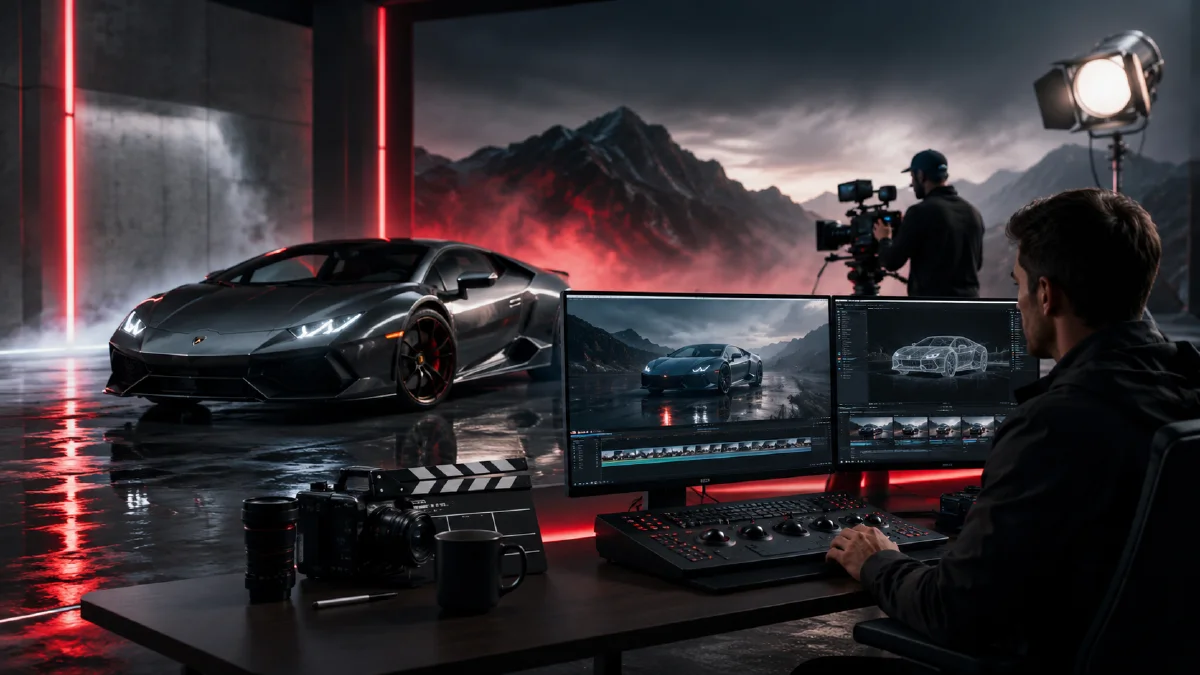
A sports car commercial depends on controlled intensity. The car should feel fast, sculpted, and desirable, but the video should still be clear enough for the viewer to remember the vehicle. AI can create dramatic automotive scenes quickly when the workflow separates storyboard, scene generation, product accuracy, motion, and final edit.
The practical definition: an AI sports car commercial is a short automotive film built from planned scenes, generated backgrounds or concept frames, product-accurate vehicle placement, image-to-video motion, and music-driven editing. It can be used for concept pitches, social teasers, launch mood films, or speculative creative exploration.
For another vehicle approach, see AI miniature landscape car commercial. For more dramatic environments, read AI car ad workflow for extreme environments. For shot-level prompting, use director-style AI video prompts.
The four-stage workflow
| Stage | Goal | Output |
|---|---|---|
| 1. Storyboard | define pace, environment, and angles | shot list |
| 2. Scene generation | create cinematic car frames | still images |
| 3. Product accuracy | replace or refine the vehicle | accurate hero frames |
| 4. Motion and edit | animate, cut, and finish | final video |
This workflow is useful because vehicle shape matters. You can explore wild cinematic scenes first, then refine the car to match the intended product before animating.
Stage 1: storyboard the commercial
A simple 20-second sports car ad can use five shots:
| Shot | Purpose | Visual |
|---|---|---|
| 1. Atmosphere | establish world | dawn road, empty city, mountain pass |
| 2. Detail | show design | wheel, headlight, body line |
| 3. Reveal | introduce full car | car emerges from shadow |
| 4. Motion | show performance | smooth tracking drive |
| 5. Hero | create final memory | parked or slow moving beauty shot |
Write one sentence for each shot before generating anything. If the ad has no shot logic, the edit may become a collection of impressive but disconnected clips.
Stage 2: generate cinematic car scenes
Prompt example for an atmosphere shot:
Cinematic sports car commercial frame on a winding coastal road at dawn,
low mist, warm sunlight just above the horizon, clean asphalt,
dramatic but refined atmosphere, premium automotive advertising style,
wide 16:9 composition, no text.
Prompt example for a reveal:
Low-angle three-quarter view of a sleek red sports car emerging from a dark tunnel,
headlights glowing softly, wet reflective road, strong contrast,
cinematic motion-ready composition, premium automotive brand film.
Prompt example for a detail:
Macro close-up of a sports car wheel and sculpted side panel,
glossy paint reflections, precise metal detail, dark studio road environment,
shallow depth of field, high-end automotive photography.
If the car is fictional, these prompts can be enough. If it is a real vehicle or a strict concept design, use a reference-based refinement step.
Stage 3: refine the vehicle
Vehicle replacement should keep the scene but improve product accuracy:
Replace the car in this frame with the provided sports car reference.
Keep the road, lighting, camera angle, reflections, and background unchanged.
Match the vehicle perspective naturally.
Preserve the exact body shape, headlights, wheel position, color, and proportions.
No extra cars, no license plate text, no logo changes.
This step is essential for commercial credibility. AI-generated cars often look convincing but may change the front fascia, wheelbase, or lighting details from shot to shot.
Stage 4: animate each shot
Keep motion specific:
Reveal shot:
The sports car rolls slowly out of the tunnel into dawn light.
Headlight reflections glide across the wet road.
Camera tracks backward smoothly from a low angle.
Vehicle shape remains stable, no sudden speed change, no extra vehicles.
Detail shot:
Camera glides along the wheel and side panel.
Reflections move across glossy paint.
The car remains stationary, shallow depth of field, premium detail.
Driving shot:
The sports car drives smoothly along the winding coastal road.
Camera follows from a front-left three-quarter angle.
Road and background move naturally, car remains sharp and stable.
Controlled speed, cinematic dawn light.
Avoid asking the car to drift, jump, spin, and transform unless the brand concept is intentionally extreme. Most premium automotive ads benefit from clarity and control.
Editing rhythm
A 20-second cut:
| Time | Shot |
|---|---|
| 0-3 seconds | dawn road atmosphere |
| 3-6 seconds | wheel or headlight detail |
| 6-10 seconds | tunnel reveal |
| 10-16 seconds | driving tracking shot |
| 16-20 seconds | final hero frame |
Sound design can include low engine tone, road texture, wind, and a restrained musical build. The final shot should hold long enough for the viewer to remember the car.
Choose the driving environment intentionally
The road should reinforce the car's personality. A coastal road suggests freedom and aspiration. A tunnel suggests reveal and speed. A mountain pass suggests handling and control. A wet city street suggests nightlife and premium reflections. A desert road suggests heat, endurance, and isolation.
Do not mix too many environments in one short ad. A tunnel, city, mountain, and desert in 20 seconds can feel like a trailer template. Pick one main world and one supporting detail. For example, start in a dark tunnel and exit onto a dawn coastal road, or begin with a detail shot in a garage and move into a wet city drive. The environment progression should feel like one journey.
Product-frame discipline
Every automotive cut needs at least one frame where the viewer can study the vehicle. This can be a parked beauty shot, a slow rolling profile, or a clean three-quarter hero. If every shot is fast, reflective, or partially hidden, the ad may feel exciting but leave no product memory.
Use detail shots as pacing control
Detail shots are not filler. A wheel, headlight, side panel, or interior stitch can slow the edit just enough before a driving shot. They also give the viewer proof of design quality. Use them between atmosphere and motion: road, detail, reveal, drive, hero. This sequence creates anticipation and makes the driving moment feel earned.
When prompting detail shots, keep the crop specific and avoid too much camera movement. A slow glide across paint or metal is usually enough. If the detail shot introduces a different car color or material, regenerate it before editing.
Interior details can also help if the vehicle position is premium: steering wheel, seat stitching, dashboard light, or door handle. Use them sparingly so the exterior shape remains the main memory.
Prompt constraints for cars
| Failure | Fix |
|---|---|
| car shape changes | "preserve exact vehicle body proportions and wheelbase" |
| extra cars appear | "single vehicle only, no traffic" |
| license plate text appears | "no readable plate text" |
| reflections look messy | "clean controlled glossy reflections" |
| motion feels fake | "smooth tracking camera, realistic road movement, stable car" |
Try it in Naviya
Generate scene frames in Naviya Image Generator, then animate them with Naviya Image to Video. Use Naviya Reference to Video to preserve a specific car design, and explore social ad versions with Naviya AI Video Ads.
Final checklist
Before publishing, verify:
- The commercial has a clear shot sequence.
- The vehicle remains the same across clips.
- Camera movement feels smooth and intentional.
- The car is not hidden by environment or effects.
- Lighting supports the vehicle shape.
- The final hero frame is clean and memorable.
A sports car ad can be intense without being chaotic. AI gives you fast scene exploration, but the film succeeds when every frame serves the vehicle: reveal the world, reveal the design, show controlled motion, and end on a strong hero image.