2026-06-12
AI Cream Food Commercial: Storyboard a Sensory Product Video
Build an appetizing cream or dessert product commercial with AI storyboard prompts, macro texture shots, lifestyle scenes, and polished video editing.
Try this workflow in Naviya
Use the guide to shape a still image, then keep it as a first frame or campaign asset.
Open the studio
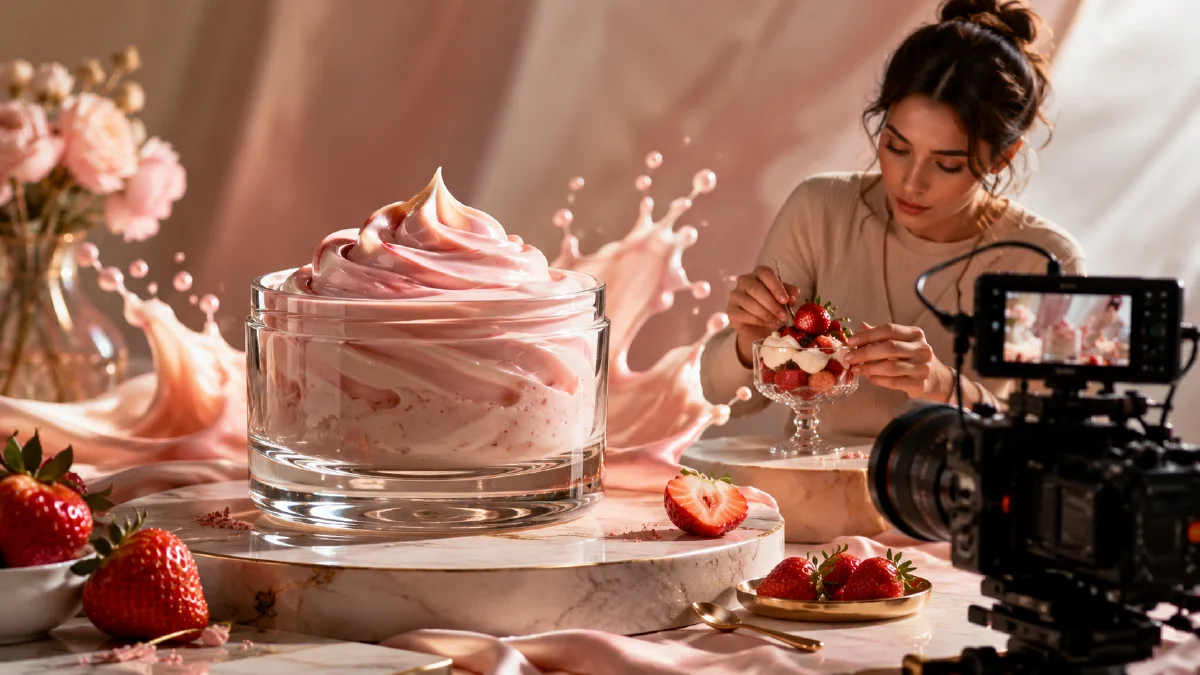
Food advertising depends on sensory proof. A cream, dessert topping, yogurt, butter, frosting, or whipped product has to look smooth, rich, cold, soft, indulgent, or fresh before the viewer reads a single benefit line. AI can generate beautiful food shots, but the strongest commercial comes from a planned storyboard rather than one random hero image.
The practical definition: an AI cream food commercial is a short sequence of generated scenes that highlights appetite, texture, packaging, and emotional payoff. It usually combines lifestyle energy, ingredient motion, product close-ups, and a final branded hero frame.
For a general video structure, read the AI video prompt guide. For food and beverage pacing, compare this with AI fruit drink promo video workflow. If your product already has photography, use AI product photography to video to turn approved images into motion.
Start with the appetite promise
Before writing prompts, define what the product should make the viewer feel. Cream products can move in several directions:
| Direction | Visual language | Best for |
|---|---|---|
| Silky luxury | Slow macro, gold light, smooth swirls | premium dessert or beauty-food crossover |
| Summer joy | Bright street, vivid color, upbeat cuts | whipped topping or chilled treat |
| Homemade comfort | warm kitchen, soft hands, gentle pour | family dessert or baking product |
| Fresh fruit | strawberry, citrus, cold highlights | yogurt, cream, smoothie, fruit dessert |
| Indulgent texture | close-up spread, spoon pull, glossy surface | frosting, custard, soft cheese |
This decision affects every shot. A product cannot feel both minimalist-luxury and street-summer-chaotic unless the concept deliberately connects those worlds.
A six-shot storyboard
The core idea can be expanded from a four-part flow into a six-shot commercial:
- Mood opener.
- Ingredient or flavor cue.
- Texture macro.
- Packaging hero.
- Usage moment.
- Final brand frame.
You can cut this down for a six-second ad or expand it into a 30-second video. The order matters because it moves from emotion to proof to memory.
Shot 1: mood opener
Use the opening shot to set energy. For a colorful summer product, a street scene can work:
Low-angle wide shot of a vibrant summer street lined with bold colorful murals,
sunny sky, palm shadows, distant city shapes, high color saturation,
lively cheerful atmosphere, cinematic lighting, premium food commercial mood.
Camera glides forward slowly, color reflections shimmer, no product yet.
This shot does not need to explain the product. It gives the commercial a world. If your product is more premium, replace the street with a marble tabletop, quiet dining room, or softly lit dessert bar.
Shot 2: fruit or flavor cue
Fruit motion makes cream feel fresh and desirable. Keep the motion specific:
Several plump bright red strawberries swirl in a transparent cream-colored space,
warm soft highlights, tiny droplets, dynamic whirlpool composition,
appetizing macro detail, clean commercial food photography style.
Motion: strawberries rotate gently as creamy ribbons fold around them.
If the product is vanilla, use vanilla bean, cream waves, and warm light. If it is chocolate, use cocoa dust and glossy folds. Do not overload the frame with every ingredient.
Shot 3: texture macro
This is the sensory proof shot. A cream product should show smoothness. The camera can be close enough that the viewer sees ridges, swirls, and surface sheen.
Extreme macro close-up of silky cream forming a smooth spiral peak,
soft glossy texture, tiny air bubbles, warm highlight along the surface,
minimal background, premium dessert advertising photography.
Motion: spoon pulls through the cream slowly, leaving a clean ribbon trail.
If the product is packaged cream rather than prepared food, you can show a dollop landing on fruit or a spread moving across pastry.
Shot 4: packaging hero
At least one shot must show the product clearly. If the label is generated, avoid relying on fake readable text. If you have real packaging, use a reference workflow.
Premium cream product jar on a clean reflective surface,
soft condensation, subtle fruit pieces nearby, bright appetizing rim light,
centered commercial hero composition, shallow depth of field,
empty space above for short headline.
Motion: slow push-in, highlights move across the jar, product remains stable.
Product stability matters more than dramatic movement. If the jar morphs, reduce the camera motion and add constraints.
Shot 5: usage moment
Show the product creating value. It may top a dessert, swirl into coffee, fill a pastry, or spread across a cake.
Cream is gently spooned over fresh strawberries in a clear dessert glass,
soft layers visible, bright highlights, appetizing close-up,
hands remain natural and minimal, premium food lifestyle mood.
Motion: cream flows slowly from spoon, fruit remains sharp, camera locked.
Usage shots help viewers understand how to imagine the product in their life. They also keep the ad from feeling like a disconnected texture montage.
Shot 6: final brand frame
Finish with clarity:
Final product hero frame: cream product jar beside a finished strawberry dessert,
clean bright background, soft premium shadow, empty space for short brand line,
fresh and indulgent mood, stable composition.
Motion: very subtle light shimmer, no product movement.
For paid social, this is where a short offer, benefit, or brand line can sit. Keep it readable on mobile.
Reuse the storyboard across campaign assets
The same six shots can produce more than a video. The mood opener can become a social thumbnail, the texture macro can become a product detail page visual, the packaging hero can become a display ad, and the final dessert frame can become a seasonal email banner. This matters because food production is often judged by how many useful assets it creates, not only by the final edit.
When generating stills, leave some versions with clean negative space. A shot that looks perfect as a video frame may be too crowded for a headline, price, or call to action. Planning alternate crops at the prompt stage saves time later.
Editing rhythm
For a 15-second ad:
| Time | Content |
|---|---|
| 0-2 seconds | Mood opener |
| 2-4 seconds | Fruit or flavor cue |
| 4-7 seconds | Texture macro |
| 7-10 seconds | Packaging hero |
| 10-13 seconds | Usage moment |
| 13-15 seconds | Final brand frame |
Use sound design carefully: a soft spoon pull, a light pour, a bright musical hit, or a gentle sparkle can enhance appetite. Do not cover weak visuals with too much motion graphics.
Common failures and fixes
| Problem | Fix |
|---|---|
| Cream looks plastic | Add "soft glossy dairy texture, tiny air bubbles, natural folds" |
| Product label warps | Use reference-to-video and reduce camera movement |
| Food motion feels chaotic | Limit motion to one action: pour, swirl, spoon pull, or fold |
| Shots feel unrelated | Repeat the same color palette and lighting style |
| Ad lacks product memory | Add a longer, clearer packaging hero |
Try it in Naviya
Generate the storyboard stills in Naviya Image Generator, animate each approved frame with Naviya Image to Video, and test finished ad variants in Naviya AI Video Ads. For real packaging consistency, use Naviya Reference to Video.
Final takeaway
A cream food commercial should not just look delicious in one frame. It should build appetite over time: atmosphere, flavor, texture, product, use, memory. AI makes the process faster, but the storyboard keeps it commercial. When each shot has a job and every prompt repeats the same sensory direction, the final ad feels intentional rather than assembled from unrelated beautiful clips.