2026-06-12
Multilingual AI Supplement Spokesperson Videos: Build Trust Without Reshoots
Create multilingual AI supplement spokesperson videos with stable hosts, clear product framing, compliant benefit copy, and reusable short-form ad variants.
Try this workflow in Naviya
Turn a product, hook, or campaign idea into short social-ready ad concepts.
Create video ad variants
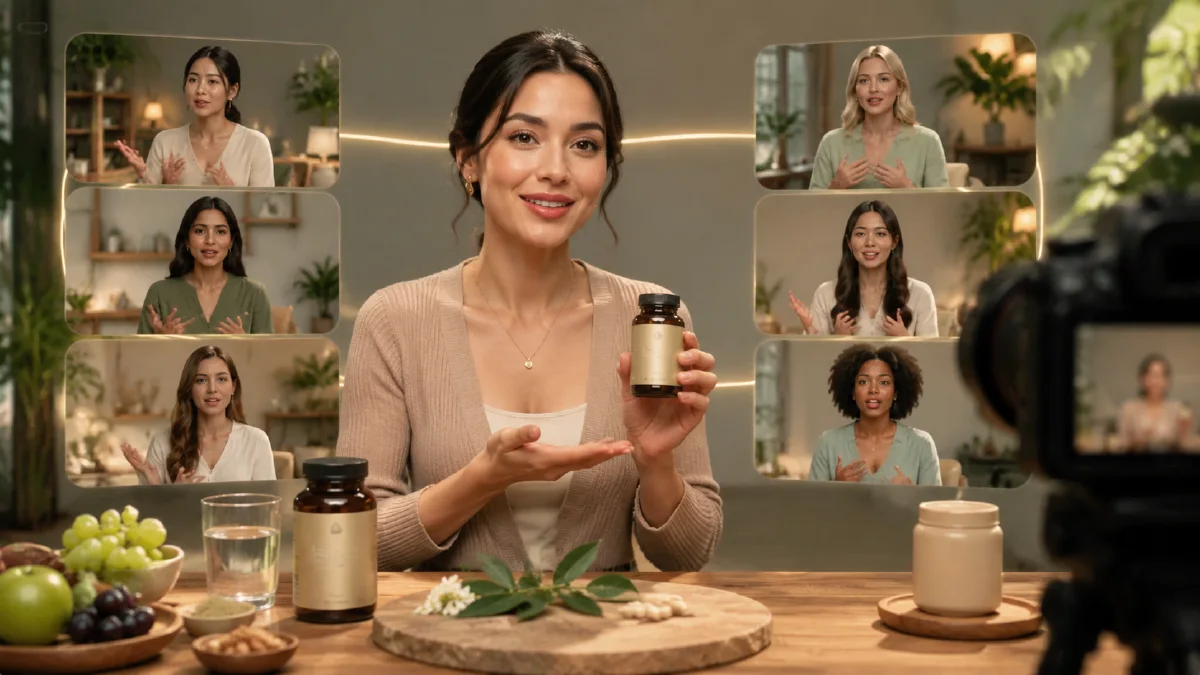
Multilingual AI supplement spokesperson videos work best when the host feels like a calm product guide, not a synthetic sales mascot. The viewer needs to understand who is speaking, what product is being introduced, why the product belongs in a daily routine, and whether the brand sounds credible. That is a lot to fit into six to fifteen seconds, so the workflow should start with structure instead of a long script.
The strongest supplement clips usually begin from a clean host image. The host faces the camera, holds or stands beside the product, and has enough neutral background space for captions. For prompt structure, pair this with the UGC AI video ad prompts and the performance guidance in micro-expression AI video prompts.
Start with a spokesperson brief
Before writing a prompt, define the host as a brand asset. A useful brief has five parts:
| Element | What to specify |
|---|---|
| Audience | Age range, market, language, shopping context |
| Host | Age, styling, posture, facial expression, camera relationship |
| Product role | Bottle in hand, product on counter, pack beside host |
| Scene | Kitchen, bathroom counter, pharmacy-style shelf, home office |
| Tone | Evidence-aware, friendly, routine-based, not exaggerated |
For wellness products, do not make the host look like a doctor unless the brand has a clear reason and the final legal review supports it. A warm kitchen, neutral home office, or clean shelf is usually safer and more believable than a clinic set. The goal is a credible ecommerce explainer, not a medical endorsement.
Build the first frame
The first frame decides whether the video will stay stable. If the host is turned too far away from camera, lip sync and expression can drift. If the product label is tiny, the model may invent unreadable text. If hands are complex, the result can feel fake. Use a simple portrait setup:
Create a vertical spokesperson first frame for a wellness supplement ad.
Host: friendly mature adult facing camera, relaxed shoulders, natural smile.
Product: supplement bottle held at chest height with label area visible but not readable.
Scene: bright kitchen window, soft morning light, clean counter, no clutter.
Camera: medium close-up, eye-level, smartphone-realistic.
Style: trustworthy ecommerce spokesperson, natural skin texture, clear light.
Constraints: keep hands simple, preserve bottle shape, avoid medical props, leave space for captions.
If you need one campaign in several languages, keep the wardrobe, background, and product placement consistent. The voice and caption can change, but the visual identity should not. This is where reference-based generation helps: the same host can deliver English, Spanish, French, Japanese, or Arabic versions without rebuilding the visual world every time.
Write language-safe scripts
The shortest spokesperson scripts are often the strongest. Instead of trying to explain the full ingredient list, choose one shopper-friendly idea: morning routine, travel convenience, bedtime habit, or daily consistency. Keep claims conservative. Say "designed to support a daily wellness routine" instead of promising a body outcome. Say "easy to add to breakfast" instead of implying a medical result.
Use this script pattern:
Hook: "I keep this by my breakfast because it makes my morning routine easier."
Product cue: "It is a simple daily supplement format."
Benefit frame: "I like that it fits into a consistent wellness habit."
Close: "Add it to your routine and see if it works for your day."
For multilingual variants, do not translate word for word if the rhythm becomes unnatural. Rewrite for speech length and local shopping behavior. A ten-second English line may become too dense in German or too stiff in Japanese. Treat each language as a native ad, not a subtitle pass.
Prompt the talking performance
A talking host should not move like a presenter on a stage. Small head motion, one product gesture, and natural eye contact are enough. You can use this prompt after uploading the host frame:
Animate this spokesperson image into an 8 second vertical supplement ad.
The host speaks naturally to camera with warm eye contact and subtle mouth movement.
They hold the supplement bottle steady near chest height and make one small nod.
Speech: "I keep this in my morning routine because it is simple, consistent, and easy to remember."
Camera: locked smartphone medium close-up, slight handheld realism.
Mood: calm, trustworthy, everyday wellness.
Constraints: preserve the same face, hands, bottle shape, label area, wardrobe, and kitchen background.
Do not add medical claims, medical equipment, floating text, or UI overlays.
When testing multiple languages, keep the same motion prompt and replace only the speech line. If the mouth movement becomes too dramatic, shorten the line or use a calmer delivery instruction such as "measured pace, small articulation, no exaggerated smile."
Plan variants by market
The same supplement can support different ad angles without changing the host. For example:
| Variant | Visual cue | Script angle |
|---|---|---|
| Morning routine | Kitchen light, mug, product on counter | Easy to remember before work |
| Travel | Product beside toiletry bag | Consistency on busy days |
| Desk habit | Home office, water glass | Fits into a workday break |
| Family-safe tone | Calm kitchen, neutral styling | Simple routine, no hype |
| Senior wellness | Mature host, bright home setting | Clear explanation and trust |
Create one master host frame, then generate several clips with different settings only when needed. If the brand depends on strong recognition, keep the location the same and change the script. If the campaign needs localized lifestyle relevance, keep the host and product stable while adjusting the background.
Compliance checks before publishing
Supplement advertising needs careful wording. AI makes it easy to produce many variants, but every variant still needs review. Check the final video for:
- Disease, cure, diagnosis, or treatment language.
- Before-after body claims that imply guaranteed results.
- Medical authority cues that the brand cannot substantiate.
- Ingredient claims that differ from the product page.
- Fake label text or invented certifications.
- Captions that promise more than the voiceover says.
If a claim feels risky, rewrite toward habit, convenience, taste, format, or routine. A credible ad can still perform well without aggressive promises. In many ecommerce contexts, a simple host saying why the product fits a daily pattern is more believable than a dramatic result claim.
Try it in Naviya
Start in Naviya AI Video Ads to test the campaign angle and script. Use Image to Video when you already have a clean spokesperson first frame. Use Reference to Video when the same host must stay consistent across languages, products, or ad batches.
For the next iteration, build a three-language set: one English clip, one localized rewrite, and one silent caption-first version. Keep the same host, product placement, and gesture. Then compare which element changes performance: language, caption, or hook.
Final workflow
- Define the host, audience, product role, and compliance boundaries.
- Generate or select a clean first frame with simple hands and clear lighting.
- Write a short speech line for each market instead of translating literally.
- Animate one calm talking performance and preserve the product.
- Add captions outside the generated video so text stays readable.
- Review claims, labels, and visual consistency before launch.
The best multilingual spokesperson system is not just one video in many languages. It is a repeatable visual asset: a trustworthy host, a stable product, and scripts that adapt to how each audience actually shops.