2026-06-12
AI Video Generator for Social Ads: Workflow, Prompts, and Formats
Use an AI video generator for social ads with platform-safe formats, product hooks, prompt templates, and repeatable creative testing workflows.
Try this workflow in Naviya
Turn a product, hook, or campaign idea into short social-ready ad concepts.
Create video ad variants
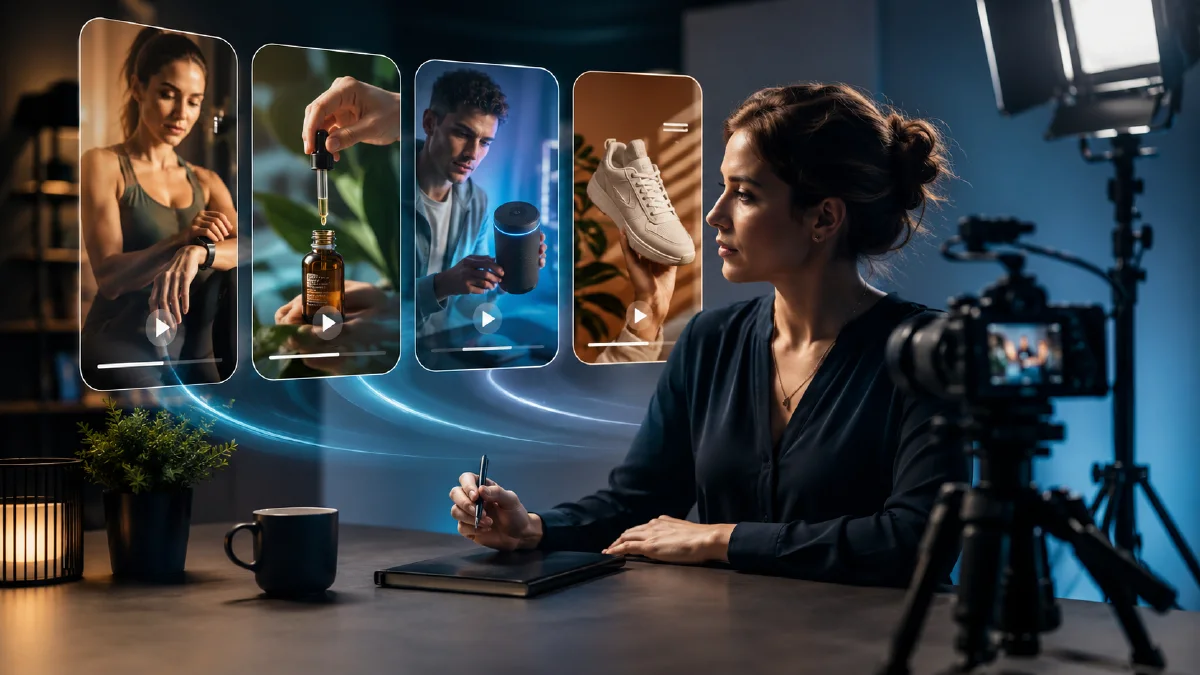
An AI video generator for social ads should help you make fast creative variants, not replace marketing judgment. The winning clip still needs a clear audience, a strong first second, a visible product or subject, and platform-safe framing.
Use this guide for TikTok, Instagram Reels, YouTube Shorts, ecommerce ads, and product launch concepts. Start with Naviya AI Video Ads when the goal is campaign creative.
For more specific follow-up guides, use AI video hook examples, UGC AI video ad prompts, image to video for TikTok and Reels, and the YouTube Shorts AI video generator workflow.
What makes a good social ad video?
A usable social ad has:
- A clear first-second hook.
- One product, face, or visual subject.
- Simple motion.
- Caption-safe space.
- Vertical framing when needed.
- A benefit the viewer can understand quickly.
- No tiny fake text or unstable product labels.
AI video is useful because it can create many visual variants quickly. It is not useful if every variant changes the product, hides the benefit, or needs too much explanation.
Social ad formats
| Platform | Common format | Creative priority |
|---|---|---|
| TikTok | 9:16 | Hook, creator feel, fast visual change |
| Instagram Reels | 9:16 | Polished lifestyle or product reveal |
| YouTube Shorts | 9:16 | Loopable motion and clear subject |
| YouTube ads | 16:9 or 9:16 | Product benefit and brand clarity |
| Ecommerce retargeting | 1:1 or 4:5 | Product stability and clean details |
The same asset can be adapted across formats, but do not blindly crop. A vertical ad needs safe space for captions, interface overlays, and thumb-stopping motion.
Prompt template for social ads
Create a [duration] second [platform] social ad.
Product or subject: [what appears].
Audience: [who this is for].
Hook: [what happens in the first second].
Benefit: [why the viewer should care].
Scene: [setting, light, mood].
Camera: [one camera move].
Motion: [one product or subject movement].
Format: [9:16, 1:1, 4:5, or 16:9].
Constraints: leave caption-safe space, preserve product or identity, avoid fake readable text.
TikTok ad prompt
Create a 6 second 9:16 TikTok-style product ad.
Product: a compact desk humidifier.
Audience: people building cozy desk setups.
Hook: mist starts immediately and catches violet light in the first second.
Benefit: create a calmer workspace atmosphere.
Scene: creator desk, keyboard, soft lamp, dark background glow.
Camera: handheld slow push-in.
Motion: mist rises smoothly while background lights flicker subtly.
Constraints: keep product centered, leave room for captions, no fake app UI.
Instagram Reels prompt
Create a 6 second Instagram Reels product video.
Product: a glass skincare serum bottle.
Audience: beauty shoppers who like premium routines.
Hook: a close-up highlight moves across the bottle in the first second.
Benefit: polished skincare ritual feel.
Scene: clean bathroom counter, soft morning light, minimal background.
Camera: macro push-in.
Motion: droplets shimmer on the bottle, light moves gently.
Constraints: preserve bottle shape and label area, no distorted text, no extra products.
YouTube Shorts prompt
Create a seamless 6 second YouTube Shorts ad loop.
Product: a premium coffee bag beside a ceramic cup.
Audience: coffee lovers looking for a better morning routine.
Hook: steam rises from the cup immediately.
Benefit: rich cafe-style morning at home.
Scene: warm kitchen counter, sunlight through blinds.
Camera: locked close-up.
Motion: steam loops smoothly, light moves slowly across the bag.
Constraints: keep package shape stable, avoid fake readable text, make the loop feel natural.
Social ad creative angles
Use one angle per video:
| Angle | Best visual |
|---|---|
| New arrival | Product emerges from light or shadow |
| Premium feel | Slow camera, controlled reflections |
| Problem-solution | Messy-to-clean or flat-to-polished transition |
| UGC hook | Creator holds or points to product |
| Giftable product | Clean tabletop, warm lifestyle lighting |
| Before-after | Lighting or environment changes around the same subject |
| Feature highlight | Macro close-up of one detail |
Do not ask one clip to cover every feature. Social ads work better when each variant tests one idea.
Image to video or text to video?
Use image to video when:
- You have a real product photo.
- You need product shape stability.
- You need a person or character to stay consistent.
- You want a controlled first frame.
Use text to video when:
- You are exploring concepts.
- The product can be represented generically.
- You need a broader lifestyle scene.
- You do not have a strong source image yet.
For product photos, read the product image to video guide. For prompt examples, use AI video ads prompts.
Creative testing workflow
- Write one audience and one offer.
- Pick three visual hooks.
- Generate one clip per hook.
- Keep the same product and format.
- Compare first-second clarity.
- Save the best camera and motion phrase.
- Create a second batch with small changes.
The goal is not one perfect AI video. The goal is a repeatable system for testing visual ideas quickly while keeping the product truthful.
Quality checklist before publishing
- The product or subject is visible in the first second.
- Motion supports the ad angle.
- There is room for captions.
- The product did not change shape.
- The clip works without sound.
- The video does not rely on unreadable generated text.
- The format matches the placement.
Build a reusable ad testing matrix
The fastest way to improve AI social ads is to test one variable at a time. Create a matrix with audience, hook, product proof, format, and motion. Keep the product, offer, and duration stable while changing only the opening idea. For example, a skincare brand might test "messy sink to clean routine," "macro texture reveal," and "creator holds product to camera" as three separate hooks. If the macro version wins, the next batch can test three different macro motions instead of restarting from scratch.
Use this simple matrix:
| Variable | Example choices |
|---|---|
| Audience | New buyer, returning customer, gift shopper |
| Hook | Problem, sensory detail, surprising setting |
| Product proof | Texture, scale, use moment, before-after context |
| Motion | Push-in, light sweep, handoff, orbit |
| Format | 9:16 story, 1:1 feed, 16:9 cutdown |
Score each clip on first-second clarity, product stability, caption space, and whether the viewer understands the offer without sound. A beautiful clip that hides the product should not beat a simpler clip that sells the idea clearly. Build still frames in the AI image generator, animate product-safe versions with image to video, and use the AI video ads generator when you want the workflow centered on ad variants. For motion language, pair this article with image to video prompts and text to video prompt examples.
Try it in Naviya
In Naviya, start with one product image or a short written ad concept, then generate a small batch of vertical ad variations. Use image to video when the product must stay stable, use the AI video generator when you are exploring a broader scene, and use AI video ads when the goal is a social-ready creative set. Save the winning hook, motion phrase, and format so the next test starts from evidence instead of guesswork.
AI video is strongest for social ads when it helps you test more hooks with less production overhead. Keep the prompt focused, protect the product, and make each clip answer one marketing question.